












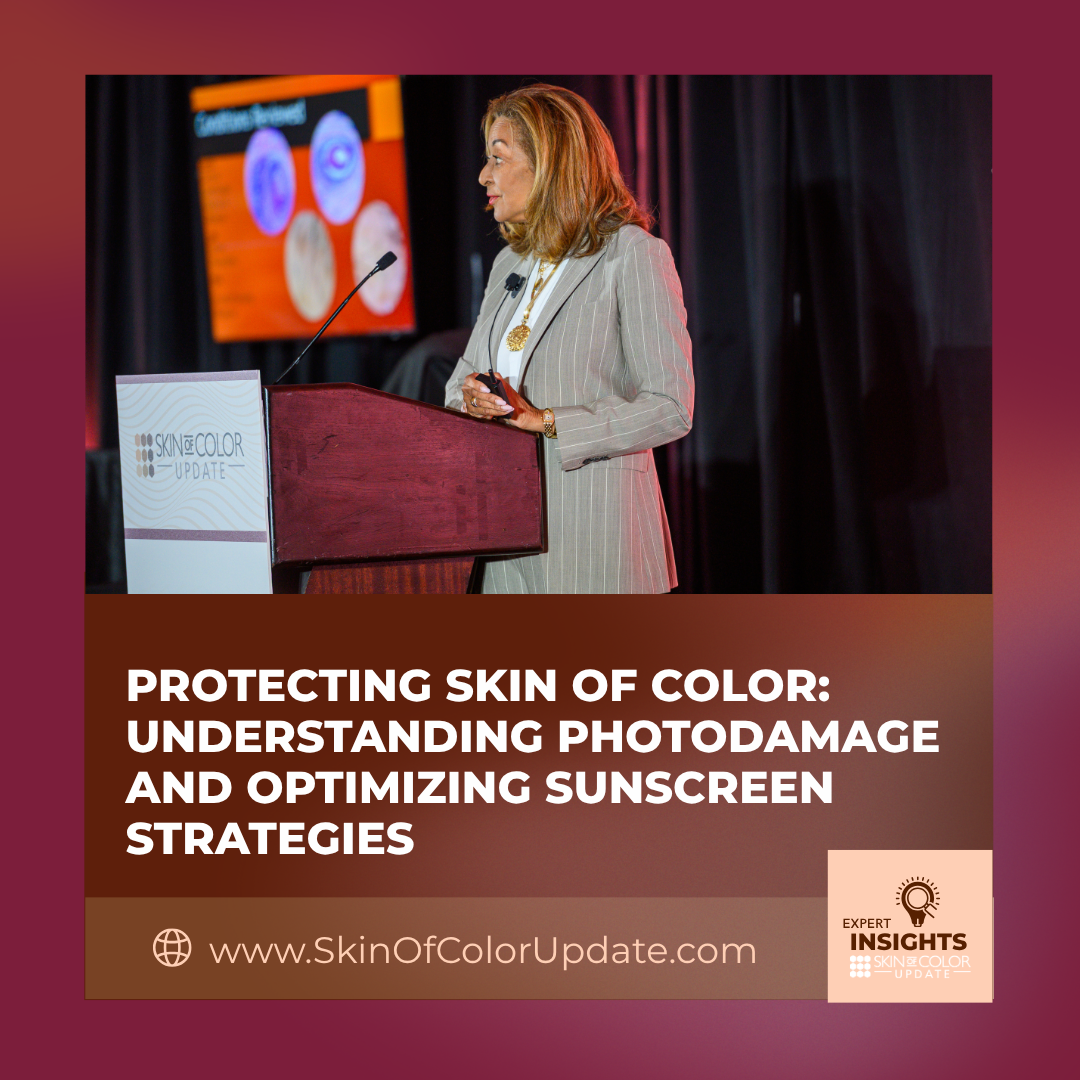
Recent advances in photodermatology have expanded our understanding of how multiple wavelengths across the electromagnetic spectrum contribute to skin damage, aging, pigmentary disorders, and skin cancer risk. While ultraviolet (UV) radiation has traditionally been the primary focus of sun protection, visible light (VL), high-energy visible (HEV) light, infrared (IR) radiation, and even heat have now been implicated in clinically meaningful photodamage, particularly in individuals with skin of color. In her lecture, Dr. Susan Taylor reviewed the mechanisms and clinical manifestations of UVR, VL, and IR-induced skin injury, and highlighted evidence-based photoprotection strategies tailored to diverse skin types.
Spectrum of Electromagnetic Radiation and Cutaneous Penetration
Traditional sun protection has long emphasized ultraviolet (UV) radiation, but recent advances highlight that visible light (VL) and high-energy visible (HEV) light also contribute significantly to hyperpigmentation and post-inflammatory dyspigmentation, particularly in individuals with medium to dark skin phototypes (Fitzpatrick III–VI). Dr. Taylor emphasized the importance of comprehensive photoprotection strategies that extend beyond UV coverage.
There are three main types of radiation which include UV radiation, visible light, and infrared radiation. Each of these types of radiation vary in wavelength and therefore how deeply they penetrate the skin, which in turn determines their effect on different cells within the skin. Although UV radiation has long been studied and has an established role in the pathogenesis of skin cancer, solar burns and premature aging, visible light and infrared radiation can also contribute to chronic changes within the skin, particularly in regard to hyperpigmentation and premature aging.
UV Radiation: Molecular and Clinical Impact
Dr. Taylor discussed the necessity of photoprotection for the maintenance of skin health and preventing photodamage, photoaging and photo carcinogenesis. There are a variety of photoprotective measures that can be undertaken to prevent the deleterious effects of EMR on the skin. Environmental photoprotection includes sun avoidance, photoprotective clothing and broad-spectrum sunscreens.
Dr. Taylor went on to discuss photobiology, which is the interaction of EMR on skin function and skin diseases. UVR provides the benefit of photosynthesis of vitamin D, however, acutely can cause erythema, pigmentation, suppression of acquired immunity, and enhancement of innate immunity. The chronic effects of UVR include photoaging and photo carcinogenesis.
UVA penetrates the dermis and likely plays a larger role in long-term cellular damage. It is responsible for indirect DNA damage via reactive oxygen species (ROS) and contributes significantly to mutagenesis and photoaging. UVB is absorbed in the epidermis and some upper dermis. It induces the inflammatory response of sunburn and direct DNA damage resulting in the formation of cyclopyrimidine dimers.
The pathogenesis of photoaging includes UVR-induced ROS, mitochondrial DNA mutations, altered gene transcription, activation of inflammatory cytokines (IL-1, TNF-alpha), and increased activity of AP-1 and NF-κB, which leads to increased MMPs and degradation of collagen types I and II. Antioxidant depletion and inhibited TGF-β signaling further impair procollagen synthesis.
Visible Light: Chromophore-Driven Pigmentary Activation
Dr. Taylor discussed how the biologic effects of VL are mediated through cutaneous photoreceptive chromophores. Chromophores absorb specific light wavelengths, which excite electrons into a higher state and activate secondary messengers (i.e., reactive oxygen and nitrogen species, ATP, cAMP), resulting in inflammation and proliferation.
Key chromophores include:
-
- Melanin: Blue light (HEVL) stimulates expression and activity of tyrosinase, thus increasing melanogenesis (especially in patients of color).
- Opsins: Interaction with blue light sustains tyrosinase activity and increases keratinocyte differentiation.
- Heme (COX): Absorbs red light and IR-A leading to intracellular ROS accumulation and altered gene expression, protein activity, and inflammation.
Visible light can penetrate the dermis and has persistent pigmentary effects, especially in individuals with skin of color.
Infrared Radiation and Environmental Heat Effects
Dr. Taylor reviewed how the overexposure of IR can lead to damage and contribute to photoaging. This process is mediated by activator protein 1 (AP-1) which induces expression of proapoptotic gene Bcl-2 associated agonist of cell death (BAD). Increased MMP gene expression leads to degradation of extracellular matrix components. Increased temperatures of the skin in conjunction with IR exposure may lead to increased ROS production (temperature and dose-dependent relationship). It is important to remember that most studies examining the effects of IR damage were at higher levels of exposure, so extrapolation to clinical practice is limited.
Exposure to heat (≥39–41°C) also affects melanogenesis and the signaling mechanisms involved in keratinocytes. Heat activates the TRPV3 ion channel (transient receptor potential ion channel family in the vanilloid subfamily) in keratinocytes, leading to increased intracellular calcium and triggering the Hedgehog (Hh) signaling pathway. Increased melanin synthesis and pigment deposition are observed after heat treatment, and blocking TRPV3 or Hh signaling reduces these effects. This suggests environmental heat may contribute to hyperpigmentation disorders and identifies TRPV3/Hh signaling as a potential therapeutic target.
Clinical Manifestations of Photodamage
Intrinsic vs Extrinsic Aging
In photo protected skin, there are normal keratinocytes with dermal papillae present and large intact elastin fibers in the dermis. In photoaged skin there are atypical keratinocytes, flattening of dermal papillae, and solar elastosis with dense basophilic degeneration.
Extrinsic aging is due to external factors and is primarily secondary to photoaging. In lighter phototypes this manifests as fine and coarse wrinkles, skin dullness, roughness, telangiectasias, and mottled pigmentation. In skin of color, patients tend to have fewer fine wrinkles and instead have deeper rhytids with less atrophy. They can develop leathery skin and dyschromia.
Presentation in Skin of Color
Photoprotection by epidermal melanin allows for later development of wrinkles in Fitzpatrick III–VI; however, photoaging still occurs in skin of color as evidenced by histologic solar elastosis. Primary manifestations include dermatosis papulosa nigra, deeper rhytids, dyschromias and increased skin laxity. In one study of South African women, signs of photoaging were significantly more noticeable after 60 years old, including wrinkles, sagging of the lower face, and enlargement of cheek pores.
Photo carcinogenesis and Epidemiologic Disparities
Photo carcinogenesis involves:
-
- Initiation: UV-induced DNA mutations (cyclobutene pyrimidine dimers) in keratinocytes
- Promotion: Repeated UV gives mutated keratinocytes proliferative advantage
- Progression: Additional genetic changes → EMT → COX-2 activation → loss of adhesion + inflammatory amplification
Despite photoprotection from melanin, skin cancer occurs in skin of color. Later stage at diagnosis has been reported, with proposed contributors including atypical presentation patterns (sun-protected sites) and lower suspicion in both clinicians and patients.
Melanoma tends to present acrally or in non-sun-exposed regions in SOC. SCC often develops on the lower extremity or in areas of chronic scarring or inflammation. BCC remains associated with UV exposure across skin types.
Comprehensive Photoprotection Strategies
Sunscreens
Dr. Taylor discussed organic (chemical) vs inorganic (mineral) filters:
| Filter type | Strengths | Limitations |
| Organic filters | Lightweight | UVB-weighted; photodegradation |
| Mineral filters | Broad UVA/UVB protection; low irritation | Historically left white cast |
Nanoparticle zinc oxide and titanium dioxide improve cosmetic acceptability but decrease visible light protection, making them insufficient alone for pigment-prone patients.
Real-world application studies show higher SPF sunscreens may better maintain protection despite under-application.
Visible Light + Antioxidant Protection
Tinted sunscreens containing iron oxides reduce VL-induced pigmentation. Antioxidant-enriched sunscreens enhance UVA1 and VL/HEVL protection.
Systemic Photoprotection
-
- Oral Polypodium leucotomos extract has demonstrated UVR and visible light photoprotective effects but large studies are needed.
- Hyaluronic acid/tannic acid hydrogel systems show emerging broad-spectrum potential.
Photoprotective Clothing and Accessories
UPF depends on fabric density, composition, and color.
UPF 30 = adequate; UPF ≥50 = excellent protection.
A ≥7.5 cm brim on hats is required for cheek/nasal coverage. Sunglasses reduce ocular and periocular UVR/VL exposure.
Practical Recommendations: Personalized Photoprotection for Patients
| Patient Type | Recommendation |
| Fitzpatrick I–II | Broad-spectrum high-SPF sunscreen |
| Fitzpatrick III–VI or pigment-prone | Tinted mineral with iron oxide or antioxidant containing sunscreen |
| Sensitive or atopic skin | Fragrance-free mineral formulations |
| Melasma, PIH, post-procedure | Strict daily tinted sunscreen + antioxidants |
Clinical Pearls
-
- SPF does not indicate visible light protection.
• Daily tinted sunscreen use reduces VL-driven hyperpigmentation.
• Cosmetic acceptability improves adherence and outcomes.
- SPF does not indicate visible light protection.
Take-Home Points
-
- UVB, UVA, visible light, and infrared radiation each induce unique molecular pathways of photodamage, including direct DNA photoproduct formation, oxidative injury, sustained melanogenesis, and MMP-driven extracellular matrix degradation.
- Visible light, especially high-energy blue wavelengths (HEV), activates melanin and opsin-based chromophores, resulting in prolonged tyrosinase activity and persistent pigmentation, with effects more pronounced in medium to dark phototypes.
- Heat and infrared radiation independently promote melanogenesis and photoaging through TRPV3-mediated calcium influx, activation of Hedgehog signaling, and increased expression of matrix metalloproteinases.
- Despite photoprotective effects of epidermal melanin, cutaneous malignancies do occur in skin of color, and later stage at diagnosis has been reported, with proposed contributing factors including atypical presentation patterns and lower suspicion in both patients and clinicians.
- Comprehensive photoprotection should address UV, visible light, and infrared exposure through daily broad-spectrum sunscreens, visible light protection via iron-oxide–containing formulations, antioxidant strategies, and evidence-based photoprotective clothing.
References
Akhalaya, M. Y., Maksimov, G. V., Rubin, A. B., Lademann, J., & Darvin, M. E. (2014). Molecular action mechanisms of solar infrared radiation and heat on human skin. Ageing research reviews, 16, 1-11.
Austin, E., Geisler, A. N., Nguyen, J., Kohli, I., Hamzavi, I., Lim, H. W., & Jagdeo, J. (2021). Visible light. Part I: Properties and cutaneous effects of visible light. Journal of the American Academy of Dermatology, 84(5), 1219-1231.
Boothby-Shoemaker, W. T., Mohammad, T. F., Ozog, D. M., & Lim, H. W. (2022). Photoprotection by clothing: A review. Photodermatology, photoimmunology & photomedicine, 38(5), 478–488. https://doi.org/10.1111/phpp.12776
Castanedo‐Cazares, J. P., Hernandez‐Blanco, D., Carlos‐Ortega, B., Fuentes‐Ahumada, C., & Torres‐Álvarez, B. (2014). Near‐visible light and UV photoprotection in the treatment of melasma: a double‐blind randomized trial. Photodermatology, Photoimmunology & Photomedicine, 30(1), 35-42.
D’Orazio, J., Jarrett, S., Amaro-Ortiz, A., & Scott, T. (2013). UV radiation and the skin. International journal of molecular sciences, 14(6), 12222-12248.
Dumbuya H, Grimes PE, Lynch S, Ji K, Brahmachary M, Zheng Q, Bouez C, Wangari-Talbot J. Impact of iron-oxide-containing formulations against visible light–induced skin pigmentation in skin-of-color individuals. J Drugs Dermatol. 2020;19(7):712-717.
Flament, F., Zhang, Y., Jiang, R., Trehin, C., Cassier, M., Delaunay, C., … & Kroely, C. (2022). Objective and automatic grading system of facial signs from selfie pictures of South African women: characterization of changes with age and sun‐exposures. Skin Research and Technology, 28(4), 596-603.
Geisler, A. N., Austin, E., Nguyen, J., Hamzavi, I., Jagdeo, J., & Lim, H. W. (2021). Visible light. Part II: photoprotection against visible and ultraviolet light. Journal of the American Academy of Dermatology, 84(5), 1233-1244.
Gwak, M. A., Hong, B. M., & Park, W. H. (2021). Hyaluronic acid/tannic acid hydrogel sunscreen with excellent anti-UV, antioxidant, and cooling effects. International journal of biological macromolecules, 191, 918–924. https://doi.org/10.1016/j.ijbiomac.2021.09.169.
He M, et al. Visible light protection: an updated review of tinted sunscreens. Photodermatol Photoimmunol Photomed. 2025.
Horton, L., Brady, J., Kincaid, C. M., Torres, A. E., & Lim, H. W. (2023). The effects of infrared radiation on the human skin. Photodermatology, photoimmunology & photomedicine, 39(6), 549-555.
Huang, A. H., & Chien, A. L. (2020). Photoaging: a review of current literature. Current Dermatology Reports, 9(1), 22-29.
Kohli, I., Nicholson, C. L., Williams, J. D., Lyons, A. B., Seo, I., Maitra, P., … & Hamzavi, I. H. (2020). Greater efficacy of SPF 100+ sunscreen compared with SPF 50+ in sunburn prevention during 5 consecutive days of sunlight exposure: A randomized, double-blind clinical trial. Journal of the American Academy of Dermatology, 82(4), 869-877.
Krutmann J, et al. Photoprotection for people with skin of colour. Br J Dermatol. 2023;188(2):168-177.
Lautenschlager, S., Wulf, H. C., & Pittelkow, M. R. (2007). Photoprotection. The Lancet, 370(9586), 528-537.
Lim HW, Kohli I, Ruvolo E, Kolbe L, Hamzavi IH. Photoprotection of the skin from visible light–induced pigmentation: a comprehensive review. J Am Acad Dermatol. 2021;85(6):1415-1423.
Lim HW, et al. Current challenges in photoprotection. JAAD. 2017;77(1):S10-S19.
Lyons AB, et al. A review of tinted sunscreens. J Am Acad Dermatol. 2021;85(3):713-719.
Lyons, A. B., Zubair, R., Kohli, I., Nahhas, A. F., Braunberger, T. L., Mokhtari, M., Ruvolo, E., Lim, H. W., & Hamzavi, I. H. (2022). Mitigating Visible Light and Long Wavelength UVA1-induced Effects with Topical Antioxidants. Photochemistry and photobiology, 98(2), 455–460. https://doi.org/10.1111/php.13525
McDonald, K. A., Lytvyn, Y., Mufti, A., Chan, A. W., & Rosen, C. F. (2023). Review on photoprotection: a clinician’s guide to the ingredients, characteristics, adverse effects, and disease-specific benefits of chemical and physical sunscreen compounds. Archives of dermatological research, 315(4), 735–749. https://doi.org/10.1007/s00403-022-02483-4
Natarelli, N., Aflatooni, S., Stankiewicz, K., Correa-Selm, L., & Sivamani, R. K. (2025). Oral Supplements and Photoprotection: A Systematic Review. Journal of medicinal food, 28(6), 519–541. https://doi.org/10.1089/jmf.2024.0023
Ou-Yang, H., Stanfield, J., Cole, C., Appa, Y., & Rigel, D. (2012). High-SPF sunscreens (SPF≥ 70) may provide ultraviolet protection above minimal recommended levels by adequately compensating for lower sunscreen user application amounts. Journal of the American Academy of dermatology, 67(6), 1220-1227.
Polena H, et al. Comparison of visible light-protective tinted sunscreen versus untinted sunscreen in melasma patients. J Cosmet Dermatol. 2025.
Sambandan, D. R., & Ratner, D. (2011). Sunscreens: an overview and update. Journal of the American Academy of Dermatology, 64(4), 748-758.
Seo, J. Y., & Chung, J. H. (2006). Thermal aging: a new concept of skin aging. Journal of Dermatological Science Supplement, 2(1), S13-S22.
Subhadarshani, S., Athar, M., & Elmets, C. A. (2020). Photocarcinogenesis. Current Dermatology Reports, 9(3), 189-199.
Torres AE, et al. Practical guide to tinted sunscreens: indications, application, and patient selection. JAAD. 2022;86(1):24-32.
Tsai, J., & Chien, A. L. (2022). Photoprotection for skin of color. American journal of clinical dermatology, 23(2), 195-205.
Young, A. R., Claveau, J., & Rossi, A. B. (2017). Ultraviolet radiation and the skin: Photobiology and sunscreen photoprotection. Journal of the American Academy of Dermatology, 76(3), S100-S109.
Zhang, L., Zeng, H., Jiang, L., Fu, C., Zhang, Y., Hu, Y., Zhang, X., Zhu, L., Zhang, F., Huang, J., Chen, J., & Zeng, Q. (2023). Heat promotes melanogenesis by increasing the paracrine effects in keratinocytes via the TRPV3/Ca2+/Hh signaling pathway. iScience, 26(5), 106749. https://doi.org/10.1016/j.isci.2023.106749
This information was presented at the 2025 Skin of Color Update conference by Susan Taylor, MD. The above highlights from her lecture were written and compiled by Dr. Courtney Hanna.
Did you enjoy this article? Find more on Skin of Color Dermatology here.