











Psoriatic arthritis (PsA) is historically underdiagnosed, and clinician underpreparedness may play a contributing role. Decisions about screening tools, workup, and when to refer to rheumatology can feel nebulous and lead a dermatology clinician to avoid the subject altogether.
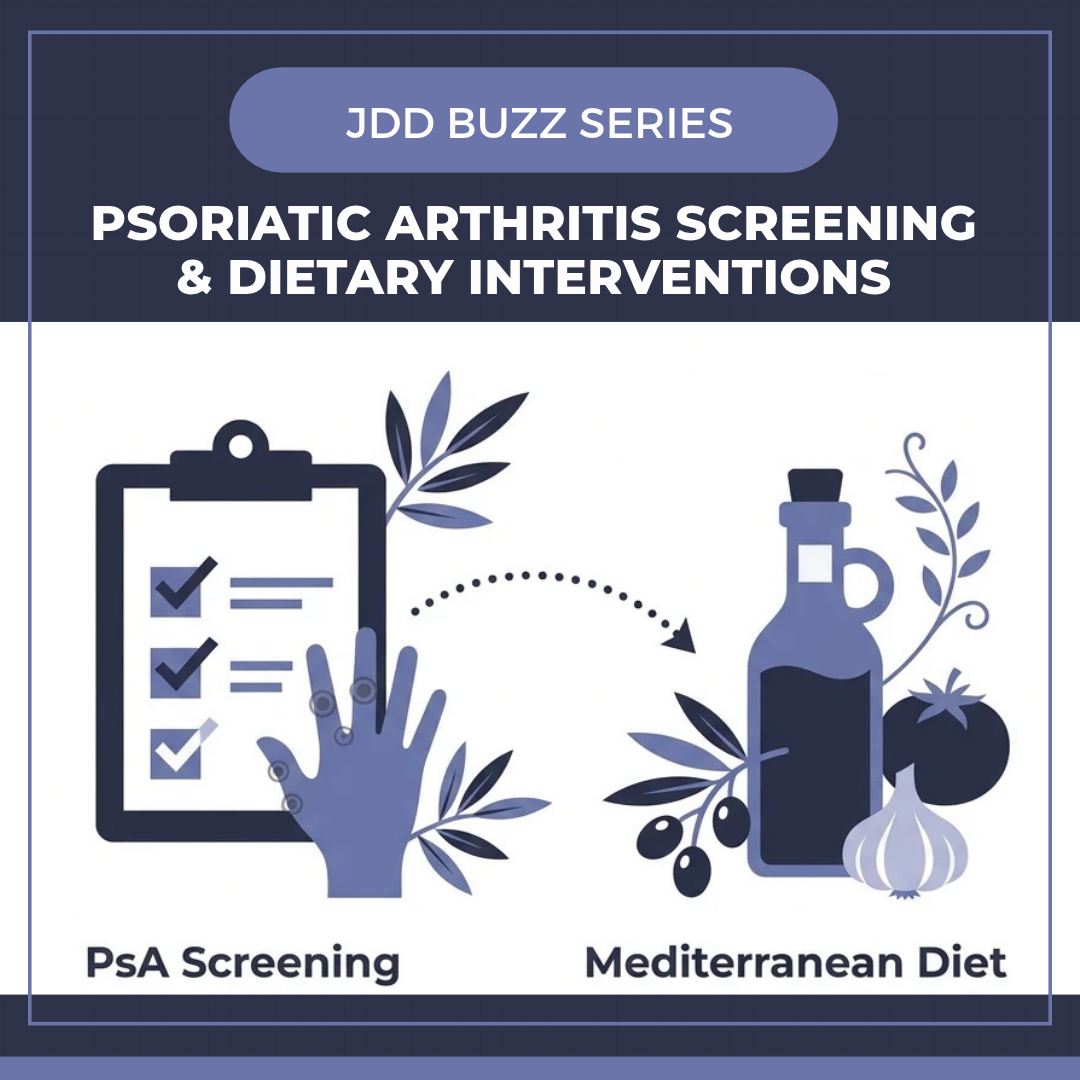
An original article published in the November Journal of Drugs in Dermatology examines the real-world utility of a PsA screening tool, variables that may predict PsA, and the impact of the Mediterranean diet in PsA pain reduction. I interviewed lead author Victor Czerkasij, DNP, FNP-C, DCNP, CWCP, MSN, MA, a dermatology nurse practitioner in Cleveland, Tenn., and adjunct faculty member at Vanderbilt University.
Your study had a three-fold purpose. What were you looking to discover, and what was the impetus behind your research questions?
The three questions we looked to answer in this small research project were first, can we validate the PEST questionnaire as a reliable tool to predict PsA; second, what variables are most likely to predict a positive PsA; and finally, can diet impact the complaint of pain in PsA? Some years ago, as a master’s student at Vanderbilt University, I completed a brief qualitative study on the degree to which moderate-to-severe psoriasis (PsO) had on adult human sexuality. I thought it might be time to answer some questions on PsA but from a different point of view. Both my parents, my wife, and one of my sons are generally vegetarian and reflect the Mediterranean diet in their lifestyle. My parents are in their late 90s and along with my wife, suffer from rheumatoid arthritis but control it by and large with a faithful anti-inflammatory diet with stringent avoidance of sugar, animal fats, dairy, and processed foods. Could this also apply to pain in PsA?
What were the clinic’s previous protocols for PsA screening, and what led the clinic to adopt the PEST method?
I am ashamed to say PsA screening was fairly non-existent and left to the discretion of the provider. The feeling was “Should we be managing PsA? There are a plethora of assessments and which can we rely on?” There was no standard, and a general fear that by finding PsA, do we order imaging and how far do we venture into rheumatology’s role, which is notoriously difficult to refer for in our community. In preparing for the project, I learned that the PEST questionnaire was high in validity, reliability, simplicity, and non-proprietary.
Were you surprised by the proportion of patients identified with PsA using PEST compared with data from the previous screening strategy?
Remember, as an organization of a dozen offices in two states, we did not have a protocol for screening for PsA among our PsO patients, and while chagrined, there is much more awareness and adoption of regular screening now. The high proportion of PEST-positive patients has been somewhat controversial, even among ourselves, because the numbers were so high in positivity as opposed to many other trials and generally published material. Sometimes, we repeated the questionnaire with another provider and the patient was consistent in their response. Our conclusion was that we had a dam waiting to break, and our patients were generally more sickly, living with PsO longer, and with a high BMI with multiple comorbidities, such as concomitant heart issues, osteo- and rheumatoid arthritis (which may overlap with PsA), depression, anxiety, and diabetes.
In patients identified with PsA, what did you discover about the role of the Mediterranean diet as an adjunct to biologic therapy?
It should come as no surprise that diet impacts health, and that providers must reflect that reality in conversations with those who are looking for an option beyond medication alone. We all innately believe that lifestyle changes can result in better outcomes but probably not so statistically significantly in such a short time. But this comes with another revelation not robustly enough discussed in the final report: Patients that received relief of pain from the diet modification were not likely to maintain the diet. As bad as pain can be, changing one’s diet is even more painful. One man reflected that, while he felt better during the trial, “I am still gonna have bacon for breakfast, chicken for lunch, and steak for supper.” It’s a conundrum. One more comment: As a team, we still believe that diet alone is not appropriate for the treatment of PsA. We strongly support the national recommendations that biologics are a standard of care in the first-line treatment of both moderate-to-severe PsO and concomitant PsA. But we also believe that we should not discount the role of diet and lifestyle modifications.
You also examined predictors of PsA diagnosis. What did you find, and did this differ from your previous understanding?
We were able to identify – in a statistically significant manner – that pain is a very likely predictor for a positive diagnosis of PsA. Maybe that is too obvious, but it is a solid reminder. We were also very curious for weight as another variable, but so many participants in the trial did not want their weight taken so we just dropped it to avoid the time for explanations. We realized that unless everyone was on board, the results would not be reliable. That is one regret that I have.
You mention several limitations to your research. How should dermatology clinicians interpret your findings, and what additional research is needed?
This small study had many moving parts and while it answered the original three questions to our satisfaction, in hindsight, we could have held out for more participants. Additionally, how honest were the patients in the study in their self-reporting? Assuming they were, what if we raised the bar to a higher percentage of meals that reflected the Mediterranean diet? Could our final results have been more robust? And why did secukinumab not perform as robustly as guselkumab, when much data shows that the IL-17 class has a good reputation for PsA? Was it skewed by our smaller population? We believe that we have started a conversation, and if someone could repeat the study somewhere else, we would be very interested if the results were replicated or not.
What else should dermatology clinicians know about PsA screening and dietary interventions?
Dermatology providers are uniquely placed to address PsA because of our growing experience and access to appropriate medications designed to improve PsA. We should all be conducting PsA screenings and if the PsO patient mentions pain, document it and consider applying the PEST questionnaire. If a provider is not confident of their skills, improve them. Find those with experience and learn how to grow your professional armamentarium. And remember to offer the option of dietary lifestyle. There are copious articles written about the benefits of the anti-inflammatory Mediterranean diet and just as many cookbooks. You should feel confident that combined with the appropriate medication and a reasonable adjustment in food intake, pain reduction may likely occur at a rate higher than medication alone.
Did you enjoy this JDD Buzz expert commentary? You can find more here.