












Topical PDT Photosensitizers (5-ALA and MAL) Therapeutic Cheat Sheet
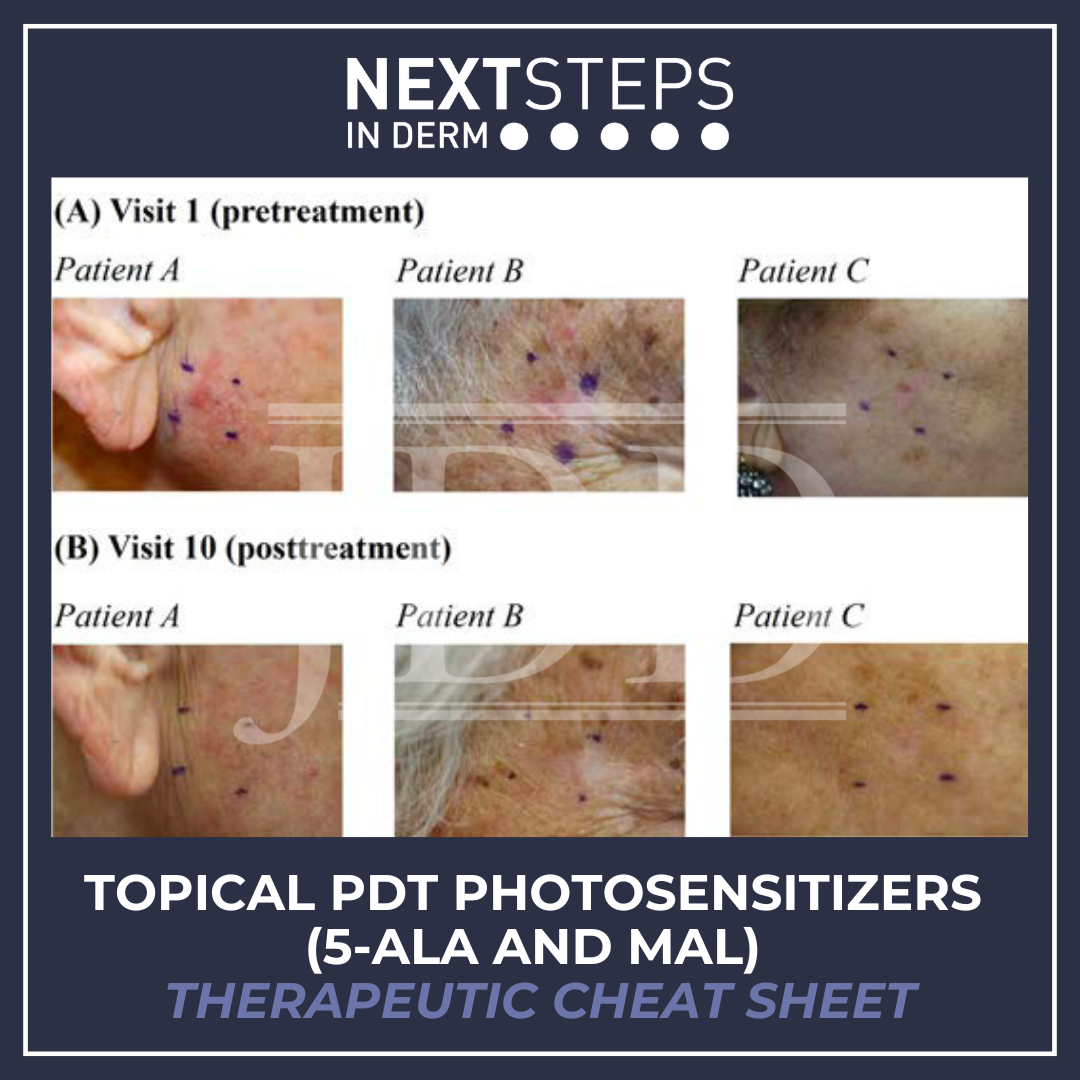 5-aminolevulinic acid (5-ALA) is an FDA-approved prodrug used in combination with light therapy for treatment of actinic keratosis and superficial basal cell carcinoma. It is a naturally occurring amino acid that is an intermediate of the heme biosynthesis pathway which cells convert into the photosensitizing metabolite protoporphyrin IX (PpIX). This compound has been applicable in two specific cl …
 Continue reading "Topical PDT Photosensitizers (5-ALA and MAL) Therapeutic Cheat Sheet"
 Photodynamic therapy (PDT) involves a lot of choices for a clinician, from deciding how to prepare the skin for a photosensitizer to selecting the light source. Next Steps in Derm, in partnership with the ODAC Dermatology Conference, addresses proven strategies for PDT in this interview with ODAC Conference Co-Chair Vishal A. Patel, MD, FACMS. Watch as Dr. Patel outlines varied options for enhanci …
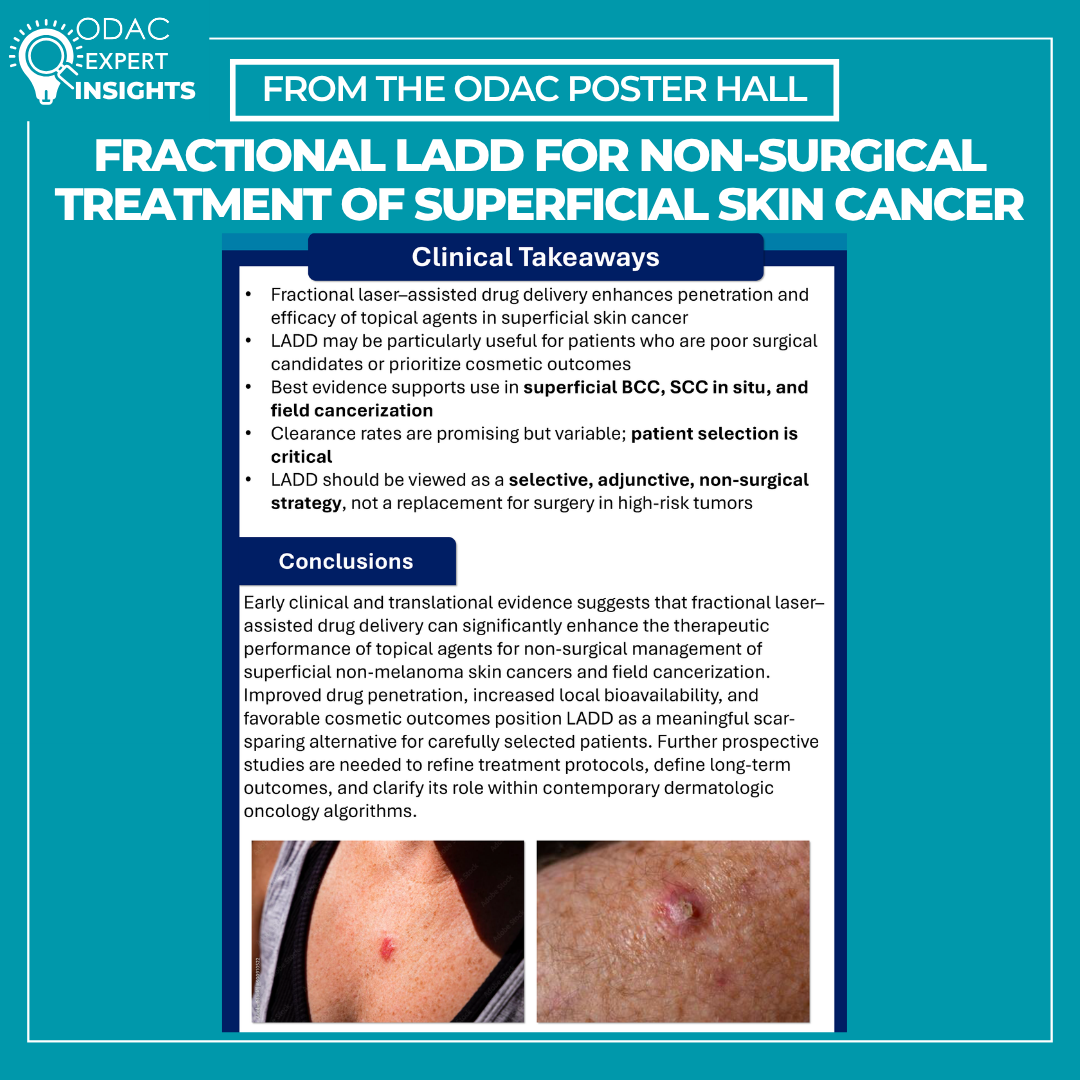 Surgery is the gold standard for skin cancer treatment, but sometimes surgery isn’t the best option. Perhaps the patient isn’t healthy enough or the patient simply refuses to go under the knife. Topical therapy is an alternative, but patient compliance is a concern. Enter fractional laser-assisted drug delivery (LADD): a non-surgical approach that enhances penetration of topical treatments, le …
 Following up on insights shared at the ODAC Dermatology Conference, Dr. Neal Bhatia, MD, FAAD, Director of Clinical Dermatology at Therapeutics Clinical Research, offered a comprehensive overview of actinic keratosis (AK) management. Dr. Bhatia emphasized actionable approaches to balancing prescription topicals and procedural techniques in everyday practice.
The incidence for non-melanoma skin …
 Your patient with extensive actinic damage and many of the lesions seen here is interested in field therapy with a light-based modality. On a cellular level, how does photodynamic therapy kill cells that make up this lesion?
A. Heat shock proteins
B. Inhibition of pyrimidine nucleotide synthesis
C. Neutrophil-mediated, antibody-dependent cellular cytotoxicity
D. Reactive singlet ox …