











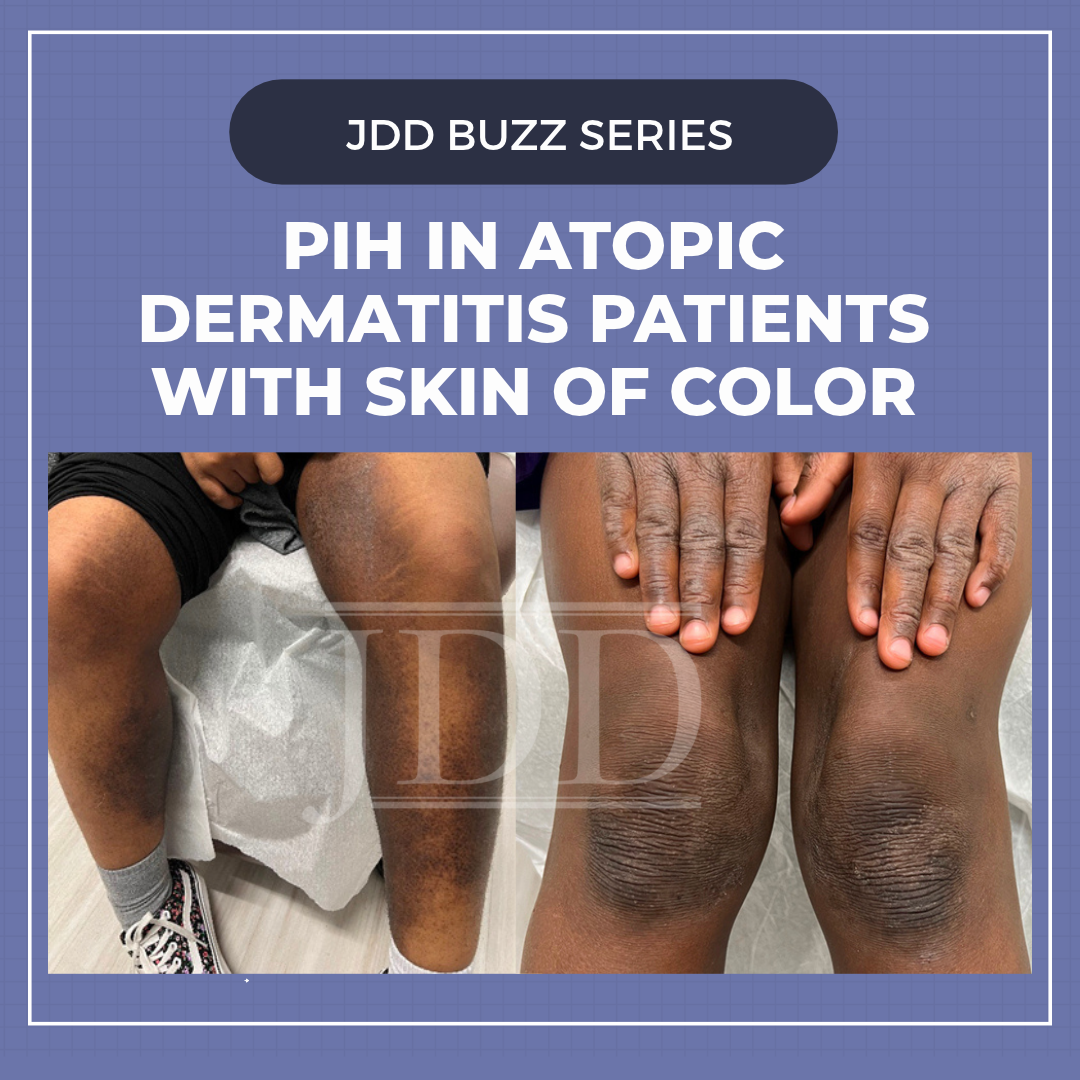
Atopic dermatitis (AD) is a distressing condition, with intense itch and pain, disrupted sleep, and multifaceted therapeutic protocols. For patients with skin of color, achieving clear or almost clear skin can feel like an especially challenging goal. Post-inflammatory hyperpigmentation (PIH) can mask as active AD, compounding the psychosocial impact of the condition and complicating treatment. A brief communication published in the October Journal of Drugs in Dermatology provides a collection of PIH cases in children and teens with AD who have skin of color, with the goal of raising awareness of the issue.
To understand what dermatology clinicians need to know about PIH in their atopic dermatitis patients with skin of color, I interviewed lead author Alexander J. Jafari, MD, MPH, dermatology resident at the MD Anderson Cancer Center and McGovern Medical School at UTHealth Houston.
You wrote that PIH is an “underrecognized complication” of AD. What needs to change about clinicians’ understanding and appreciation of PIH in AD?
Few publications have focused on the skin changes of atopic dermatitis in skin of color patients. Additionally, skin of color patients are often underrepresented in clinical trials, leading to few available before-and-after photographs that have the potential to demonstrate the clearing of the spongiotic patches but with residual PIH remaining.
Importantly, the dermatologist may recognize the patient’s improvement when undergoing treatment for atopic dermatitis, but the patient sees the residual pigment that remains in the previously affected areas and may not “perceive” that improvement is as “good” as the dermatologist believes it to be.
How does PIH impact a patient’s perspective on their AD and what constitutes treatment success?
PIH has the potential to last longer than the original spongiotic dermatitis of atopic dermatitis. Skin of color patients often have significant inflammation resulting from atopic dermatitis and that, combined with their higher Fitzpatrick skin type, leads to marked PIH. The patient construes that the PIH is “still” atopic dermatitis, even if the pruritus is under better control.
What’s important for clinicians to know about the signs of AD in skin of color as well as the condition’s severity and persistence?
Atopic dermatitis in skin of color patients may manifest as grey or purple patches rather than the erythematous patches that manifest in lower Fitzpatrick skin types. Higher Fitzpatrick phototype patients tend to have highly inflammatory and persistent atopic dermatitis, lichenification, and ultimately significant PIH.
You wrote about the underrepresentation of patients with skin of color in AD trials and clinical guidelines. What specifically needs to change, and how is the VISIBLE study in psoriasis a positive example?
Greater focus on enrollment of skin of color patients in clinical trials is essential. The NIH and the FDA support enrollment of racially and ethnically diverse patients.
The VISIBLE study was unique in that it set out to study psoriasis specifically in skin of color patients and showed PASI and IGA improvements in all skin tones. The VISIBLE study also utilized a novel patient-reported outcome measure: the Skin Discoloration Impact Evaluation Questionnaire (SDIEQ), which evaluated the patient-reported impact of dyspigmentation on quality of life. Exploratory analyses performed in the VISIBLE study highlighted that improvements in SDIEQ had a greater impact on quality of life compared to PASI improvements for skin of color patients with psoriasis.
You presented a collection of cases demonstrating PIH in skin of color patients with a wide range of AD severity. What are some takeaways you observed from these cases?
Only in looking back at numerous photos of our own cases of skin of color patients treated for atopic dermatitis did we realize how pronounced the PIH was in our own patient population. After a comprehensive literature review, we realized how underrepresented the concept of PIH was among skin of color atopic dermatitis patients. These insights prompted us to look further into this clinical finding and make an effort to publish more articles directly related to this topic.
What available treatment options can address AD as well as the resulting PIH?
There are numerous newer biologics, oral medications, and topicals that can be used to treat atopic dermatitis. Older therapies include topical steroids, methotrexate, cyclosporine, crisaborole, and phototherapy.
Addressing the PIH that may result from atopic dermatitis needs to be part of the overall education involved in managing this inflammatory disorder. Most importantly, controlling the inflammatory disorder long term can lessen the burden that comes with PIH. Proper guidance regarding itch control, infection and colonization control, moisturization and sun protection can go a long way in promoting a healthy barrier. If PIH does develop, there are several over the counter agents that can be useful to treat PIH: Mela B, Mela B double dose (utilizing Melasyl™, or 2-Mercaptonicotinoyl Glycine, from LaRoche Posay) and Radiant Tone (utilizing thiamidol, from Eucerin/Beiersdorf).
What else should dermatology clinicians know about PIH in atopic dermatitis?
An awareness of how the PIH impacts the patient’s quality of life and the impact of the long duration of PIH on patients’ lives even when the atopic dermatitis is controlled are arenas that need to be further investigated and published. Manuscripts have the potential to bring attention to an underrecognized component in the realm of managing atopic dermatitis (and PIH) in patients with skin of color. As our medical treatment options continually improve, the capacity to better manage patients with skin of color who suffer from PIH secondary to atopic dermatitis may also augment.
Did you enjoy this JDD Buzz expert commentary? You can find more here.